
Electrifying a company's vehicle fleet offers businesses an opportunity to reduce operating costs while lowering their environmental impact. When combined with renewable electricity, generated through an on-site solar installation or supplied via an energy community, electric mobility makes business travel more sustainable and helps organisations better control their long-term energy costs.
Why Switch to an Electric Fleet?
Businesses whose vehicles cover significant distances each year can benefit from fleet electrification in several ways:
- lower fuel costs
- reduced vehicle maintenance costs
- lower CO₂ emissions
- greater resilience against future energy price volatility and evolving regulations
When electric vehicles are charged using solar-generated electricity, their environmental impact is reduced even further.
Combine electric mobility and solar energy for greater benefits
The advantages of an electric fleet increase significantly when the electricity used for charging comes from solar energy.
Depending on your business, electricity can be supplied by:
- an on-site solar PV installation
- an energy community, allowing electricity to be shared with neighbouring businesses
This combination helps reduce exposure to fluctuating energy prices while encouraging the use of locally generated renewable electricity.
Learn more about energy communities and electricity sharing.
Reduce your business's energy costs over the long term
Fuel and electricity prices can fluctuate considerably over time. Producing your own renewable electricity, or sourcing it through an energy community, helps businesses gain greater control over their long-term energy costs.
By combining:
- an electric vehicle fleet;
- smart EV charging infrastructure;
- solar electricity generation or renewable electricity supplied through an energy community,
businesses can optimise their energy consumption, reduce operating costs, and lower their carbon footprint while supporting the transition to a more sustainable energy system.
A practical example in Luxembourg
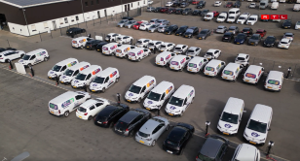
In an episode of the Energietipps programme broadcast on RTL, a delivery company based in Luxembourg explains how it developed a fleet of electric vehicles powered by solar electricity supplied through an energy community, enabling it to significantly reduce its operating costs.
This example illustrates the opportunities available to businesses in Luxembourg that want to combine economic performance, the energy transition and electric mobility.
Discover this testimonial and see how electric mobility, combined with locally generated solar electricity, can help reduce energy costs while preparing your business for the future.
How can Klima-Agence support you?
Are you considering electrifying your vehicle fleet or integrating more renewable energy into your business?
Klima-Agence provides neutral and independent advice on:
- electric mobility solutions for businesses;
- photovoltaic electricity generation;
- energy sharing and energy communities;
- financial support available in Luxembourg;
- the steps to take to implement your project.
Personalised guidance helps identify the solutions best suited to your business, your energy needs and your mobility projects.
FAQ
Is an electric fleet cost-effective for a business?
Cost-effectiveness depends on several factors, including the number of kilometres driven, charging habits, electricity costs and how the vehicles are financed. In many cases, operating costs are lower than those of conventional combustion-engine vehicles. Electrifying your fleet can also reduce your company's dependence on fluctuations in energy prices.
Why charge with solar electricity?
Solar electricity helps reduce the CO₂ emissions associated with transport. When generated locally, for example through a photovoltaic installation or as part of an energy community, it can also help lower energy costs.
Can a business join an energy community?
Yes. Depending on the project, a business can join an energy community and benefit from electricity generated from renewable energy sources, for example by other businesses or local stakeholders, in accordance with the regulatory framework in Luxembourg.