More and more households in Luxembourg are generating their own electricity with solar installations. But what can you do when you produce more electricity than you needs (and the compensation you receive for feeding it into the grid isn’t enough)? What if that surplus energy could benefit your neighbours, your loved ones, or anyone else?
Good news: it’s possible! Electricity sharing paves the way for a more local, more community-minded and smarter use of renewable energy, and presents a win-win situation for both producers and consumers.
Electricity sharing: how does it work?
When a solar installation generates electricity, it is first used to meet the household’s own needs. This is known as self-consumption.
If production exceeds the household’s consumption, the surplus electricity can be fed into the grid. (Generally speaking, the compensation for electricity exported to the grid is relatively low.) Under certain conditions, however, it is also possible to share this surplus with other consumers.
The goal is simple: to enable more people to benefit from locally produced renewable electricity, whilst enjoying potentially lower electricity costs and promoting a more efficient use of the electricity grid.
Several electricity-sharing models are available in Luxembourg.
Collective self-consumption: sharing electricity within a block of flats
In a residential building, the electricity generated by a photovoltaic system can be shared amongst several flats.
Residents thus share the electricity generated on-site directly, without having to pay grid charges for the shared electricity.
Find out more about collective self-consumption
Local energy community: sharing electricity with neighbours
When several consumers and producers wish to share electricity within an area of up to 300 metres, they can set up a local energy community.
In this case, a legal structure is required, such as a non-profit association (ASBL).
This model enables neighbours, residents of a neighbourhood or a municipality to pool the renewable electricity they generated without paying grid charges on the shared electricity.
Steps to follow to share solar power within an energy community
National energy community: sharing electricity across Luxembourg
Sharing can also take place on a national scale.
A national energy community allows members located in different regions of Luxembourg to share the same generated electricity.
This solution may, for example, be of interest for sharing electricity with relatives living anywhere in the country, or for any other sharing arrangement that extends beyond the 300-metre radius. However, grid charges will apply to the volume of electricity shared.
Sharing between active customers: a new scheme coming soon
From autumn 2026, a new sharing scheme will be available to all consumers: sharing between active customers. This allows people to share their electricity, with no distance limit, without having to set up a legal entity. Although grid charges also apply under this scheme, it facilitates the creation of sharing groups at all levels.
Why should you share your solar energy in Luxembourg?
Electricity sharing offers benefits to both producers and consumers.
For producers, it provides a means to make better use of the surplus electricity generated by their solar installation.
For consumers, it offers access to locally produced renewable electricity at a potentially favourable rate.
Beyond the financial aspect, electricity sharing also promotes more conscious energy use. Participants are incentivised to use more electricity when solar generation is available, which can contribute to a more balanced electricity grid.
How is electricity sharing managed and monitored?
Electricity sharing relies on digital tools that allow to accurately monitor the quantities shared between different members.
In Luxembourg, the Leneda platform allows users to view electricity flows within a sharing group in detail. Each producer and consumer can track their own consumption of electricity, whether it is self-consumed, shared or drawn from the grid. The group’s representative, meanwhile, has an overview of the quantities of electricity shared amongst all members. Thanks to this transparency and access to downloadable data, managing a sharing group is made considerably easier.
Is electricity sharing right for your situation?
Every project is different. Before joining or setting up an electricity-sharing group, it may be worth asking yourself a few questions:
- Do you already have solar panels?
- Do you regularly generate more electricity than you consume?
- Would you like to share your surplus energy with neighbours, relatives or other residents in your municipality?
- Is there already a local initiative near you?
Klima-Agence advisers can provide you with free, independent advice to help identify the solution best suited to your situation.
Make an appointment
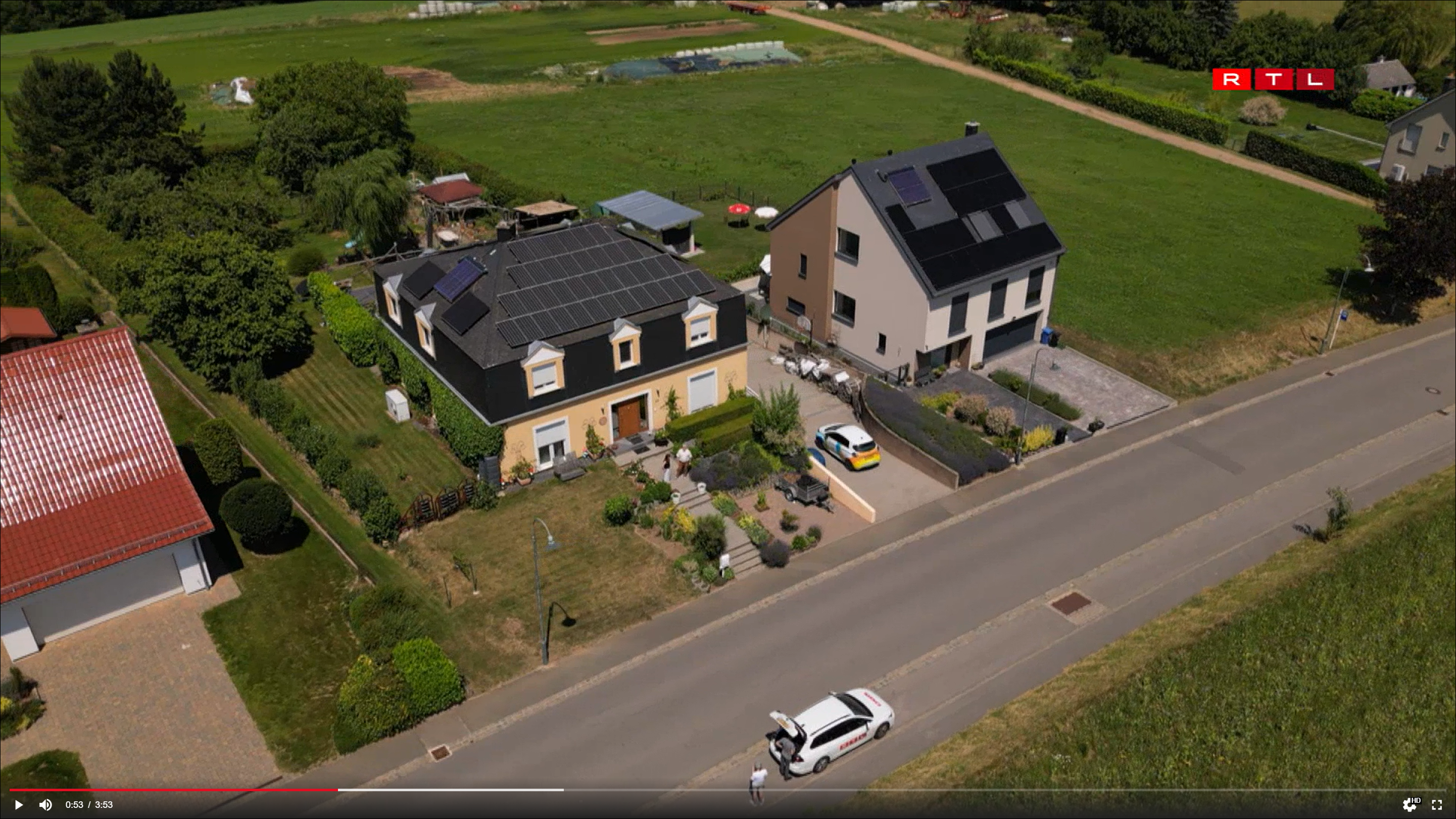
Example of electricity sharing in Luxembourg: Waldbillig
In this episode of RTL Energietipps, discover how residents of the municipality of Waldbillig have set up several electricity-sharing groups within a local energy community.