
What if your surplus electricity directly benefited nearby households?
You produce solar electricity, but you cannot always consume it at the moment it is generated.
Any surplus is then fed into the public grid, often at a relatively low remuneration, while nearby households purchase electricity at the standard retail price.
Electricity sharing, as permitted under the Luxembourg regulatory framework, offers a simple and local alternative.
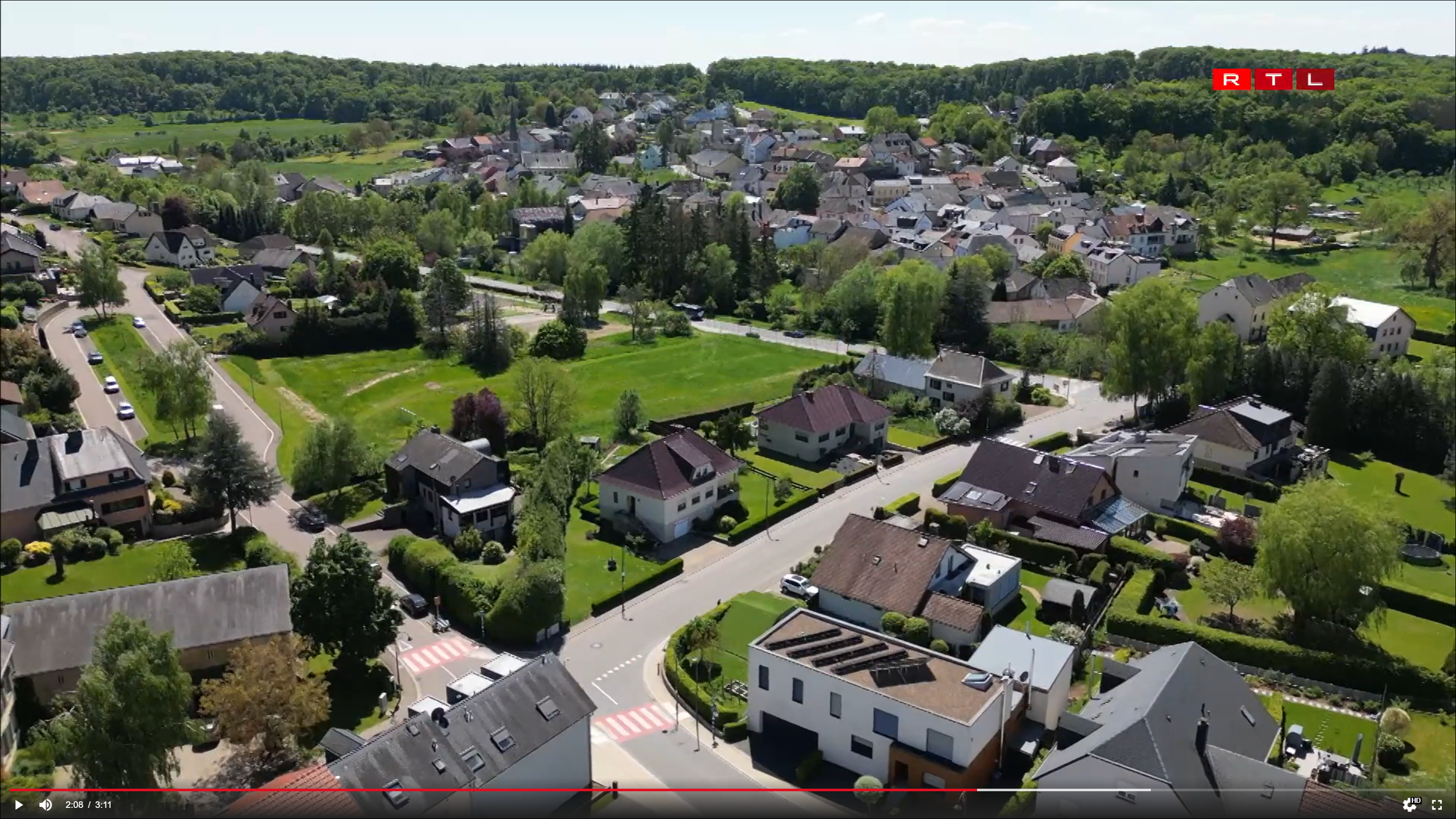
A typical photovoltaic installation in Berbourg
The Wirtz family has a 22 kWp photovoltaic system installed on the roof of their home. This system generates more electricity than the household consumes on a daily basis.
Before electricity sharing:
- surplus electricity was fed into the grid at around 4 ct/kWh,
- when electricity was needed, it was purchased from the supplier at around 23 ct/kWh.
A regulated sharing group for a win-win solution
Together with their neighbours, located within a radius of less than 100 metres, the Wirtz family set up an electricity sharing group, in line with the conditions currently applicable in Luxembourg, allowing up to three participants.
Today, the surplus electricity is supplied directly to Mr Giessen at an agreed price of 13 ct/kWh.
The result:
- the producer receives higher remuneration than through standard grid feed-in,
- the consumer pays less than the retail market price,
- both parties benefit financially.
A photovoltaic system with faster payback
By improving the local use of renewable electricity, sharing makes it possible to:
- increase the overall self-consumption rate,
- reduce losses linked to grid feed-in,
- shorten the payback period of the photovoltaic installation.
As Sarah Juchems from Klima-Agence explains, electricity sharing is often particularly relevant when part of the solar production cannot be consumed on site, while nearby households can use this electricity immediately.
How does electricity sharing work in practice?
The principle is straightforward:
- a photovoltaic system generates electricity,
- part of the production is consumed on site,
- the surplus is allocated to the members of a sharing group according to predefined rules.
Measurement, allocation and monitoring are handled centrally via the Leneda platform, which:
- records the quantities of electricity shared,
- ensures transparent allocation between participants,
- facilitates the billing process.
For households, electricity use remains unchanged on a day-to-day basis.
Is electricity sharing suitable for your situation?
Electricity sharing may be particularly suitable if:
- you regularly generate surplus solar electricity,
- nearby households mainly consume electricity during daytime hours,
- you wish to increase the value of your production without investing in battery storage,
- you favour a collective, local and regulated solution.
Klima-Agence by your side
Are you considering electricity sharing and wondering whether it is feasible in your situation?
Klima-Agence advisers can help you to:
- understand the available electricity sharing models,
- clarify the applicable regulatory conditions,
- guide you through the necessary steps.